World Leaders Attend China's Military Parade
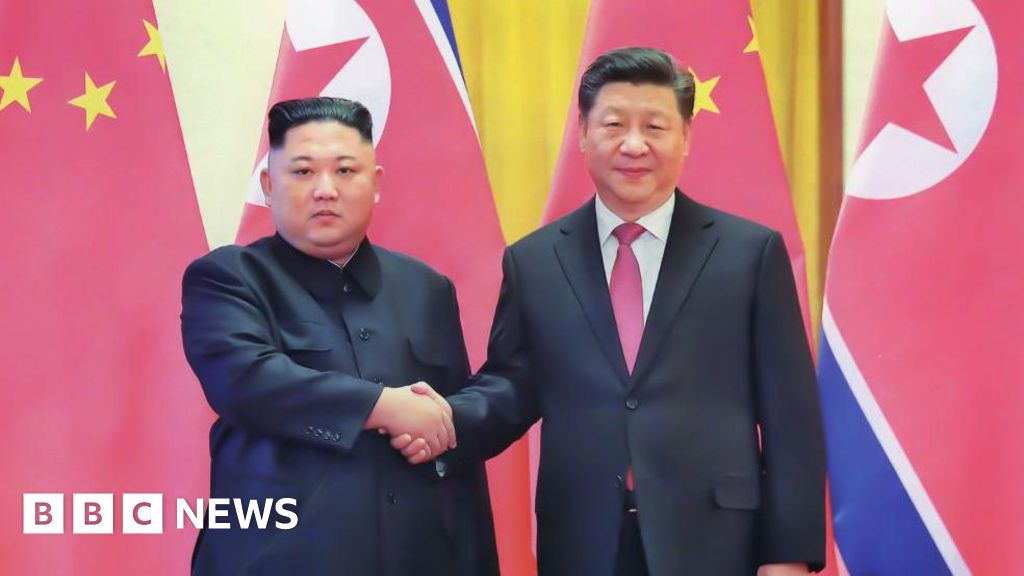
China's historic military parade will feature world leaders Kim Jong Un and Vladimir Putin, showcasing diplomatic alliances and growing global influence.
The term "North Korean" generally refers to the Democratic People’s Republic of Korea (DPRK), a highly centralized, one-party state established in 1948 under the leadership of Kim Il-Sung. It is governed by the ruling Workers' Party of Korea (WPK), which dominates all branches of government, including administrative, legislative, and judicial functions, with ultimate power concentrated in its supreme leader, currently Kim Jong Un[1][3][9]. North Korea’s government is characterized by a unique constitutional framework that enshrines the Kim family’s ideology and leadership as permanent and central to its state identity. The country’s political structure has evolved through multiple constitutional revisions, most notably in 1998 and 2016, which reinforced the power of the supreme leader and the State Affairs Commission, the highest government authority[3]. The DPRK’s primary focus is on maintaining internal political stability and advancing its strategic military capabilities, including nuclear weapons and conventional forces, to assert regional dominance and security. This military emphasis supports its revisionist ambitions on the Korean Peninsula, often leveraging its weapons programs for international bargaining and deterrence[2][5]. Despite international sanctions and isolation, North Korea remains politically stable with a growing middle class and some economic resilience, which challenges common perceptions of its economy as solely impoverished and inefficient[4]. Noteworthy aspects include its tightly controlled civil-military relations, with the WPK maintaining strict oversight over the Korean People’s Army, and its increasing engagement with regional economic bodies such as the Eurasian Economic Union as an observer member, reflecting a cautious expansion of external economic ties[2]. Human rights abuses and forced labor remain critical issues under its totalitarian regime, drawing condemnation from international organizations[7][8]. In terms of business and technology, North Korea’s activities are closely tied to state strategies, focusing on military and dual-use technologies rather than commercial innovation, with ongoing geopolitical implications for regional security and global diplomacy[6].
China's historic military parade will feature world leaders Kim Jong Un and Vladimir Putin, showcasing diplomatic alliances and growing global influence.